

Another intimidating term you might come across in the world of sourdough is baker’s percentages. The thought of doing math might make you want to run for the hills, but hear me out. Percentages are a powerful tool, and not just for sourdough.
Working with percentages isn’t essential for your day-to-day baking. Plenty of home bakers get by just fine eyeballing their ingredients. But if you’re a detail-oriented perfectionist like me and want to understand what’s actually happening in your dough, it’s worth learning.
Once you understand the basic math, you’ll be able to scale recipes with much more ease and control.
TABLE OF CONTENTS
NOTE: To work with baker’s percentages accurately, you’ll need a reliable food scale. It’s possible to calculate percentages using volume or imperial units, but it’s messier. For this post we’ll be sticking with weights in grams.
What Are Baker’s Percentages?
Baker’s percentages tell you how much of each ingredient is in a recipe relative to the flour. Flour is always 100%, and everything else—like water, starter, or salt—is calculated based on that amount. Let’s look at a simple breakdown.
| Ingredient | Weight (g) | Percentage |
|---|---|---|
| Flour | 100 | 100% |
| Water | 75 | 75% |
| Starter | 20 | 20% |
| Salt | 2 | 2% |
This means the water is 75% of the flour content, the starter is 20%, and the salt is 2%.
💡The percentage of water in sourdough is known as hydration. You can read my full guide to sourdough hydration here.
100g of flour isn’t enough for a standard-sized loaf, but it’s useful for seeing how the math works. Now let’s scale it up to something more realistic.
To do that, we’ll assume 400g of flour and use a simple formula to calculate each ingredient:

When you divide an ingredient by the flour weight, you’ll get a decimal. Multiply that number by 100 to convert it into a percentage.
| Ingredient | Weight (g) | Formula | Percentage |
|---|---|---|---|
| Flour | 400 | — | 100% |
| Water | 300 | 300 ÷ 400 | 75% |
| Starter | 80 | 80 ÷ 400 | 20% |
| Salt | 8 | 8 ÷ 400 | 2% |
Working Backwards
Say you already have a percentage in mind and want to work backwards to find the weight of a particular ingredient. For example, you want to use 500g of flour for your loaf instead of 400g, but keep the salt at 2%.
The calculation is simple:
- Start with the percentage.
- Divide by 100 to get a decimal.
- Multiply by your flour weight.

Let’s loop back to our salt example. We want to figure out how much salt, in grams, 2% would be in 500g of flour.

So, 2% salt in a 500g flour loaf equals 10g of salt. It’s that simple!
How I Saved a Cheesecake Using Baker’s Percentages
Knowing how to work with percentages isn’t only useful for baking bread. The same logic and simple math can apply to any recipe, because baking is an art of ratios.
Recently, I used percentages to solve a cheesecake conundrum, and I thought it was the perfect real-life example to include in this post.
I was making a cheesecake for my dad’s birthday. My go-to recipe is this one from Sally’s Baking, which calls for 904g of cream cheese—or about 3.75 standard-sized blocks.
The problem was that I only bought three blocks of cream cheese instead of four, thinking I already had some in the fridge. I didn’t. Sure, I could’ve run back to the store, but I wanted to try adjusting the recipe using percentages instead. And it worked! Here’s what I did.
1. Figure out the original recipe percentages
There’s hardly any flour in cheesecake, so how would percentages work? Since cream cheese is the main ingredient in this cake, I used it as the 100% base for everything else.
Using the same formula from above, here’s how the ingredients break down:
| Ingredient | Weight (g) | Formula | Percentage |
|---|---|---|---|
| Cream Cheese | 904 | — | 100% |
| Sour Cream | 240 | 240 ÷ 904 | 27% |
| Sugar | 200 | 200 ÷ 904 | 22% |
| Eggs | 150 (about 3 eggs) | 150 ÷ 904 | 17% |
NOTE: Percentages are rounded for simplicity.
2. Recalculate the recipe using actual ingredient weight
Now that we have the base percentages, we can recalculate against the actual cream cheese quantity (750g). We’ll work backwards using the same formula from above.
For example, here’s how I calculated the new sour cream weight:


| Ingredient | Weight (g) | Percentage |
|---|---|---|
| Cream Cheese | 750 | 100% |
| Sour Cream | 203 | 27% |
| Sugar | 166 | 22% |
| Eggs | 124 (about 2.5 eggs) | 17% |
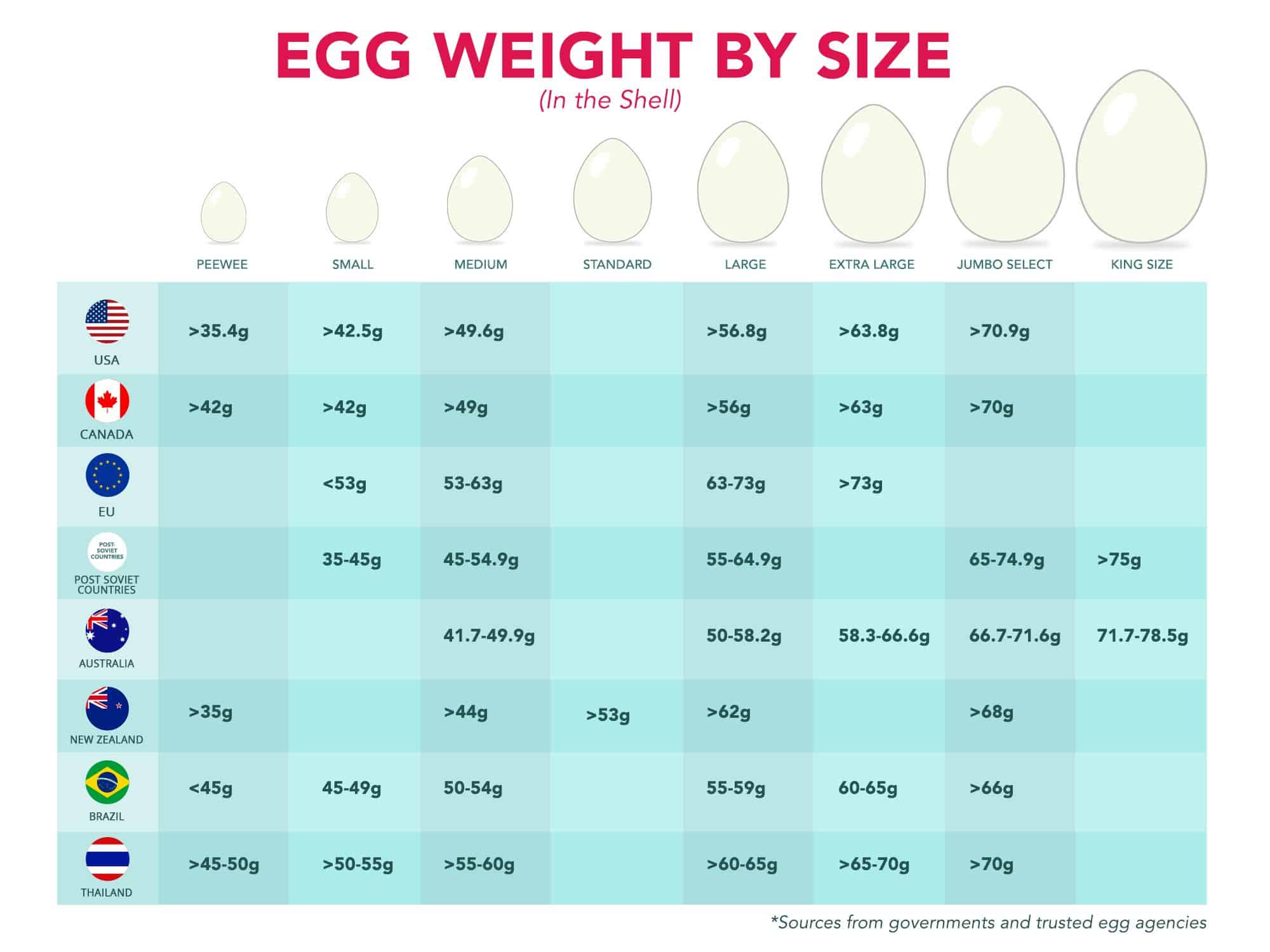
NOTE: For ingredients like eggs, which aren’t always written in grams, you can convert them using a reference chart like this. If you’re unsure of your egg size, you can also crack one into a small container and weigh it directly. In this case, I cracked 3 eggs into a bowl, whisked them lightly, then measured them out like the other ingredients to get an accurate percentage.
My cheesecake ended up a bit smaller than planned, but the ratios worked perfectly. The texture and consistency was exactly what I wanted, which wouldn’t have been the case if I hadn’t adjusted the other ingredients properly.
Final Thoughts
Familiarizing yourself with percentages and equations in baking might bring back some haunting math class memories, but I hope this post showed you why it can be worth the effort. No matter where you start, you’ll learn to understand ratios more deeply and adjust them with confidence. And best of all, you’ll never stress about scaling a recipe again.
Questions or thoughts about baker’s percentages? Drop them in the comments below—I’d love to hear from you!
See you soon,






Leave a Reply